


A structured approach to investigative research
Each assignment begins with a defined objective. We establish the information required, decide which sources and methods are appropriate, and agree a scope that reflects your needs and the realities of the relevant jurisdiction.

The process at a glance
Six stages in three phases. Verification can send work back to collection, and any request beyond the agreed scope returns to scoping before it proceeds.
Run digitally, end to end
Every stage runs in the Octopus client portal, where you place the order, follow progress and download the report.
What happens at each stage
Every stage has defined inputs and outputs, so you can see what we need from you and what you receive.
Case assessment and scope definition
We review objectives, subject information, jurisdictions, intended use and the specific questions to answer, then identify feasibility, authorization requirements, source limitations and proposed deliverables.
Inputs
- Objectives and questions
- Subject details and identifiers
- Jurisdictions involved
- Intended use of findings
Outputs
- Feasibility view
- Authorization requirements
- Known source limitations
- Proposed deliverables
Questions we ask first
- What decision will the findings support?
- Which identifiers are available for the subject?
- Are consent or authorizations required?
- What timing is realistic in this jurisdiction?
Research planning
We identify relevant information sources, verification methods, records to request and any additional enquiries that may be appropriate. Plans reflect jurisdictional differences.
Inputs
- Agreed scope
- Jurisdiction profile
- Source availability
Outputs
- Source plan
- Verification methods
- Records to request
- Follow-up enquiries
What varies by jurisdiction
- Which records are publicly accessible
- Certified or historical document availability
- Processing times at issuing authorities
- Privacy, consent and data protection rules
Information collection
We collect relevant information through appropriate sources, which may include registries, court records, public databases, media archives, authorized institutional contacts and lawful source enquiries.
Inputs
- Source plan
- Subject identifiers
Outputs
- Collected records with source references
- Media and open-source material
- Enquiry responses

Searching defined sourcesIllustrative Verification and analysis
We review information for relevance, consistency, source reliability and identity-matching issues, and assess whether discrepancies warrant further research or qualification in the report.
Inputs
- Collected material
- Subject identifiers
Outputs
- Verified and unverified items separated
- Discrepancies flagged
- Gaps referred back for further research
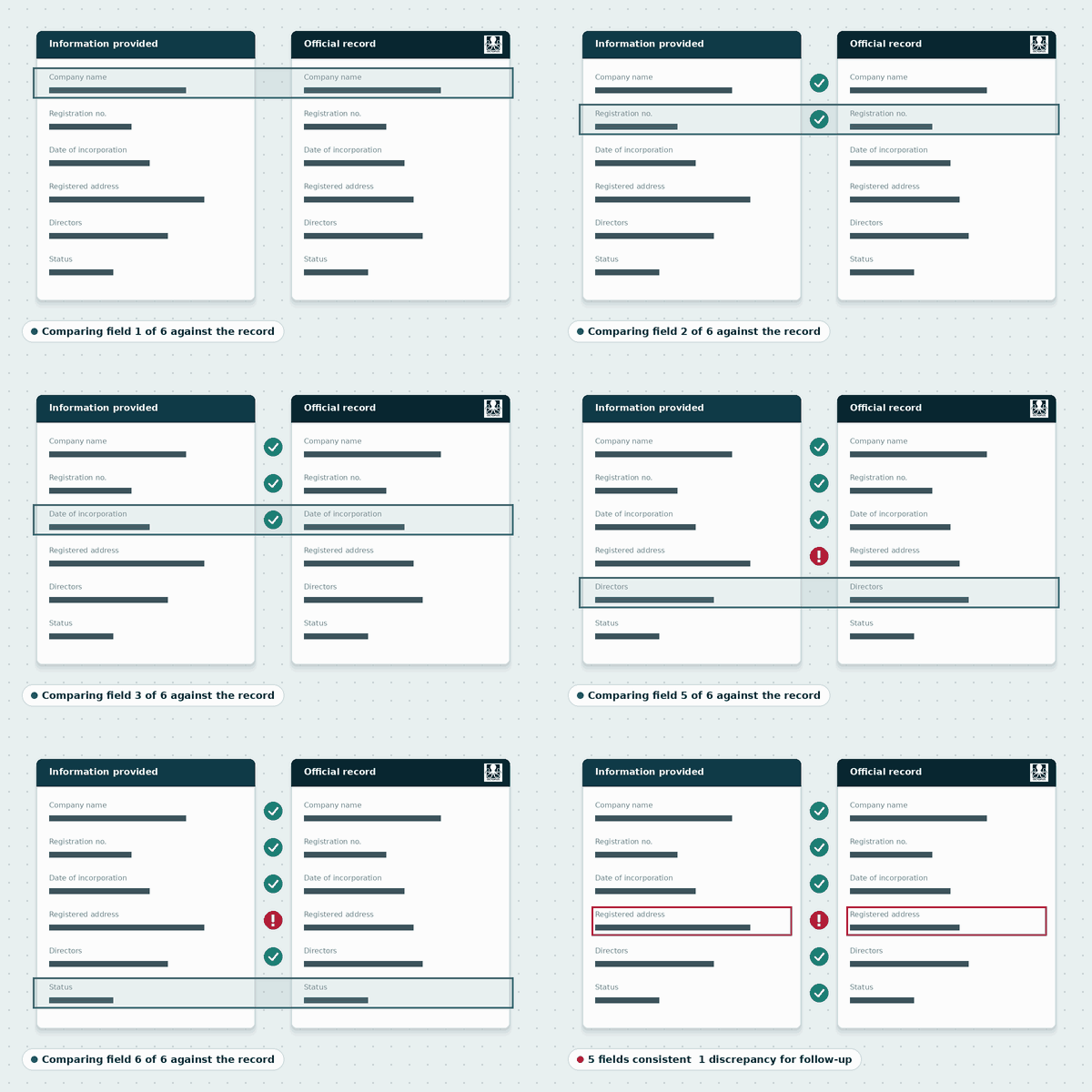
Comparing against the recordIllustrative Findings and reporting
We prepare a structured report that may include an executive summary, methodology, findings, source references, risk indicators and limitations.
Inputs
- Verified findings
- Qualified items
- Limitations
Outputs
- Executive summary
- Findings with source references
- Risk indicators
- Disclosed limitations
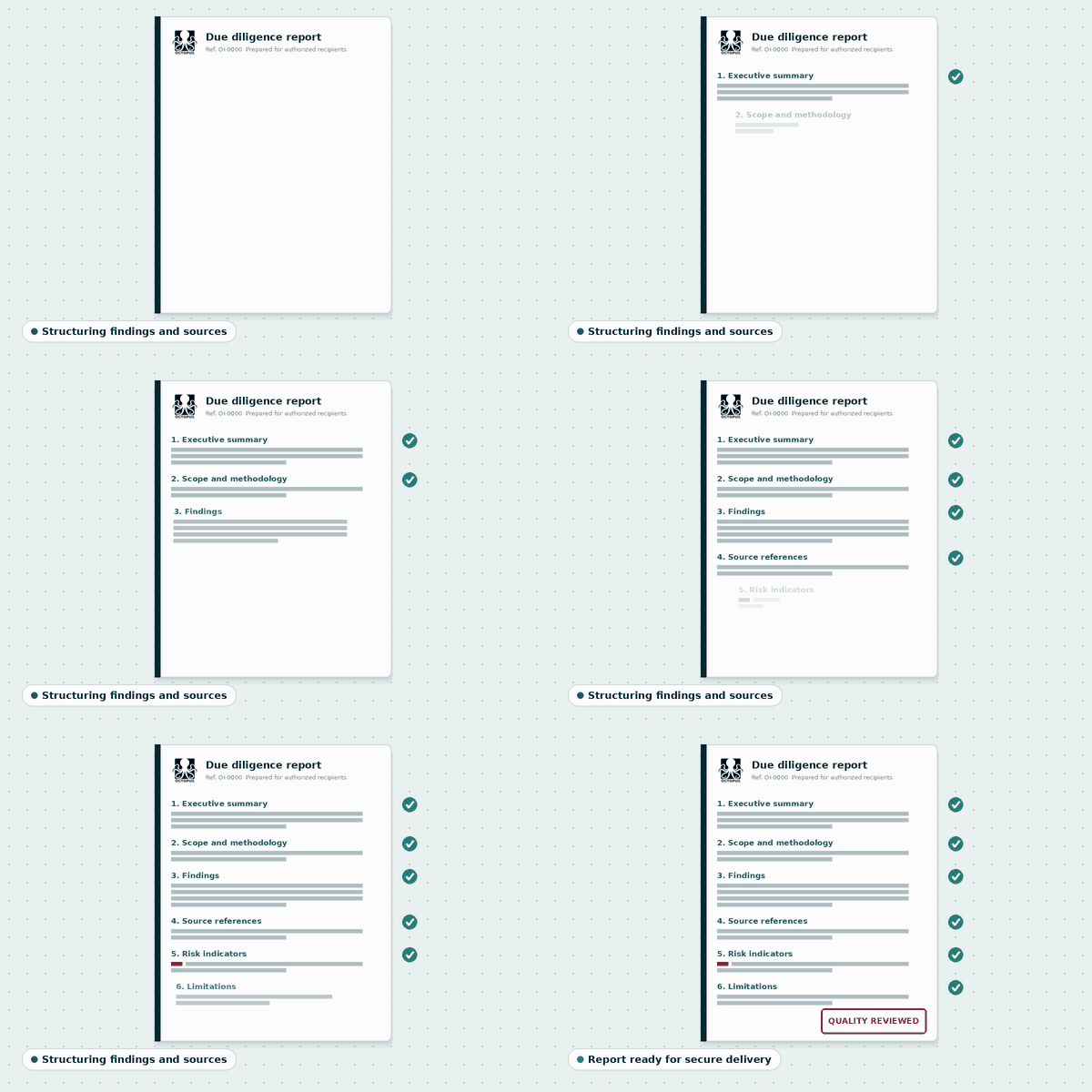
Structuring the reportIllustrative Delivery and clarification
We deliver the report through the agreed channel and address reasonable clarification requests. Additional work outside the agreed scope may require a revised scope.
Inputs
- Final report
- Agreed delivery channel
Outputs
- Report delivered to authorized recipients
- Clarifications answered
- Revised scope for any new work
Delivered in the portal
- Encrypted delivery to authorized recipients
- PDF and Word downloads with version history
- Clarification requests linked to the report
- Every access recorded in the audit trail


How the stages overlap
Collection and verification run side by side for much of an assignment. Reporting begins once the main findings are stable, followed by a quality review before delivery.
How a finding earns confidence
A single record rarely settles a question. We compare independent sources, check that each one refers to the same subject, and report the level of support behind each finding.
What a search result does and does not mean
A search that returns no results does not necessarily establish that no relevant record exists. Records may be unavailable, incomplete, unindexed, restricted or held outside the sources searched.
Information identified
Material located in the sources searched, with its source referenced.
Information verified
Material corroborated and matched to the subject with sufficient confidence.
Not established
Questions the available sources could not answer, stated plainly with the reason.
Standard and enhanced due diligence
Enhanced due diligence applies broader research and deeper examination where circumstances warrant additional scrutiny, for example complex ownership, higher-risk relationships or significant information gaps.
The comparison shows how research areas typically shift between the two. The exact scope is always agreed before work starts.
Read about due diligence services| Research area | Standard DD | Enhanced DD |
|---|---|---|
| Corporate registration and status | Typically included | Typically included |
| Directors and shareholders of record | Typically included | Typically included |
| Beneficial ownership indicators | Where relevant | Typically included |
| Litigation and court records | Where relevant | Typically included |
| Regulatory matters | Where relevant | Typically included |
| Adverse media and open sources | Typically included | Typically included |
| Associated entities and affiliations | Where relevant | Typically included |
| Discreet source enquiries, where lawful | Not usually included | Where relevant |
| Address or site verification | Not usually included | Where relevant |
Our reporting principles
Five commitments that apply to every report we deliver.
Accuracy
Findings are represented according to the information available.
Source transparency
Relevant sources and the nature of information are identified where appropriate.
Context
Allegations, proceedings, adverse reporting and sensitive findings are presented with context.
Limitations
Material gaps, unavailable records, inconclusive results and jurisdictional restrictions are disclosed.
Confidentiality
Reports are intended for authorized recipients and handled under agreed confidentiality and data protection terms.
Start with a clear scope
Share your objectives and we will outline a research plan suited to your jurisdiction and requirements.